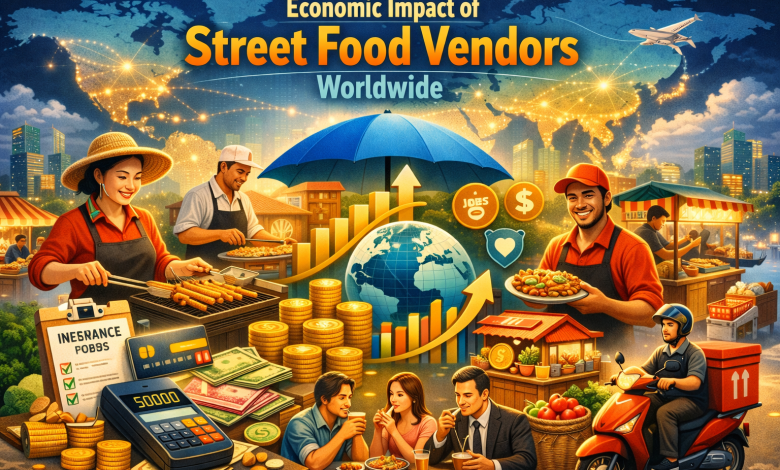
The economic importance of street vendors – or the “economic value of street food” as few refer to it – makes them a linchpin of cities and communities around the world. And no, this goes far beyond simply having another food option for lunch. In countless places, street vendors are job creators and can be the lifeline between making ends meet and falling through the cracks.
So, how does the world of street food impact global economies?
Massive Job Generator
The sheer volume of jobs street food vendors are responsible for across the world is mind-blowing.
An Easy Gateway to Entrepreneurship
In a world where most people can’t afford to fund a business startup or lack the formal qualifications required to even launch one, street food provides a low-risk avenue to entrepreneurship. There isn’t a steep cost to get started, which means that entrepreneurs from all backgrounds – including those from marginalized communities who wouldn’t otherwise have a chance at financial freedom – can experiment with business ownership.
Revenue for Local Taxes
Cities with thriving street food cultures rake in income through licensing and permits required for vendors, and in some cases, taxes. This may be unnoticed where informal economies thrive, though.
Propping Up Local Food Culture
For the most part, street food entrepreneurs are sourcing from local farmers, food producers, and markets – putting cash directly in the hands of people who desperately need it. A healthy street food economy can significantly benefit a local community’s bottom line.
Tourist Attraction
In places where street food has been integrated into the cultural fabric (think: Mexico City, Bangkok, and many more), the allure of these local flavors becomes a major tourist attraction. This draws significant dollars spent by visitors to the local economies, which eventually trickle down to other sectors of the local economy like tourism and hospitality and transportation.
Affordable Eating Options
Whether your budget is thin and you need to make every dollar count, or if you’re too exhausted to prepare your own meals for the entire week, street food’s reasonable cost is undeniably a big draw. This offers a welcome break to the masses of everyday people who generally cook at home rather than eating out. As our cities continue to grow and expand, street food is a necessity in the quest for affordable and healthy meals for lower-income, marginalized urban populations.
A Benefit of the Informal Economy
In many instances, the “dark” side of the street food sector – the fact that it’s an informal economy – is actually a huge benefit. Although street food vendors are often not officially tracked in government economic reports, there’s no doubt about their impact in the communities they serve. Due to its informal nature, official regulations and policies governing street food vendors are challenging, if not impossible, to impose.
The Role of Women
In many regions, women make up a significant portion of street food vendors, particularly those in the developing world. Often, they are the primary providers for their families in urban poverty-ridden communities. For many women in such circumstances, the ability to sell food on the streets is their only opportunity to achieve financial independence.
A Catalyst for Urban Development
As cities continue to evolve and work to improve and revitalize neighborhoods, urban planners are starting to realize how street food vendors contribute to their efforts. By allocating areas specifically for these vendors to do business, city planners can help draw crowds, both tourists and locals.
to neglected areas of the city, thereby stimulating local pride and sense of ownership.
Thanks