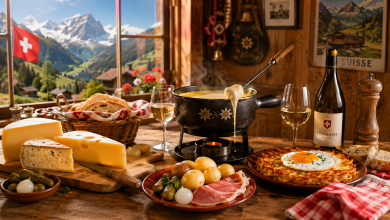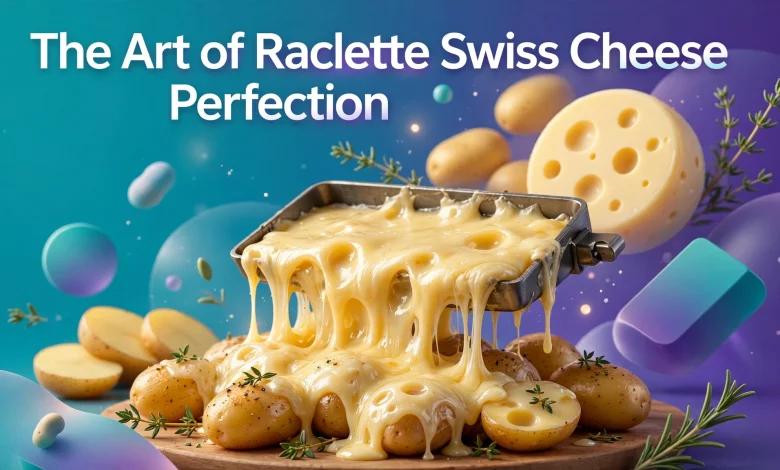
Raclette is not only a delightful dish of Swiss cheese melted over potatoes, vegetables, pickles and other accompaniments, but also a social act. The dish is rightly appreciated beyond Switzerland for its simplicity, as well as the outstanding flavor that it produces.
Historical Background
The dish originated in the Swiss Alps and was traditionally prepared by shepherds and farmers who scraped the hot cheese from a wheel over boiled potatoes or bread. The name of the dish is derived from the French verb “racler”, which means “to scrape”. This element of the dish is still the same, as the melted cheese is usually spread over boiled potatoes.
The Cheese
The key ingredient in raclette is, of course, Swiss cheese. In an authentic raclette, this cheese is used in its natural form. As such, it is made from cow’s milk and is firm, yet relatively soft when raw. Raclette cheese is rich, nutty and has a unique flavor that is not found in other varieties. When heated, it becomes even more consistent and creamy, thus complementing the other ingredients.
Potatoes
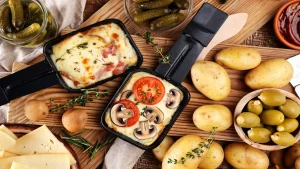
The most traditional side dish for raclette is, obviously, potatoes. Ideally, the potatoes should be small and waxy and prepared either boiled or steamed so that they are hot, but not falling apart. The neutral flavor of these potatoes highlights the nuttiness of the melted cheese.
Pickles
As with most cheese dishes, pickles are the best accompaniment to raclette. The most traditional pickles to use are small gherkins and onions. Their sharp flavor goes really well with the richness of the cheese and gives a nice contrast in terms of texture as well.
Vegetables
While cheese is the star of the show in raclette, vegetables are still important side dishes. The most traditional vegetables to add are mushrooms, peppers, tomatoes, broccoli, and onions. However, other vegetables may also be used depending on the occasion and personal preferences. Vegetables may either be grilled or added as a side dish, giving the opportunity to choose what to add to the melted cheese.
Modern Equipment
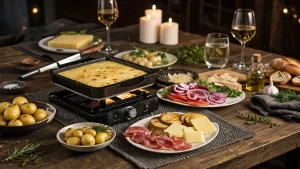
Traditionally, raclette was prepared over a fire with each person having their own small pan to melt the cheese. However, in the meantime, raclette grills have been invented, providing the chance to prepare the dish in a much easier and more organized way. With these grills, small pans with the cheese are placed on a hot plate, where they will continue to keep warm for the duration of the meal. Some grills also have a second side where the vegetables can be grilled.
Various Combinations
Depending on the occasion and personal preferences, raclette can be prepared in a variety of ways. The melted cheese is usually placed over the potatoes with vegetables, herbs or pickles on the side. However, it is also possible to add different elements to the cheese, such as meat. In any case, raclette is a highly customizable dish that is focused on the personal taste of the diner.
Social Aspects
Above all, raclette is a social dish, as it emphasizes on the interaction between the guests rather than the cooking itself. In most cases, raclette is prepared in a way that everyone at the table can participate in the preparation of their own plate, rather than the host preparing the food and the guests having to eat what is offered. As such, it is a great dish for families or friends who want to spend time together, enjoying the meal rather than being preoccupied with the cooking.
Serving Suggestions
Raclette is best served when the cheese is melted, yet not burned, so that it retains its creamy consistency. The accompaniments should also be warm, but not necessarily cooked. The presentation of the dish is simple, but its ingredients are colorful and healthy and, as such, the serving should be emphasized.
Final Notes
In conclusion, raclette is a great dish that is based on simplicity and sociality. On the one hand, raclette is a humble dish of melted cheese that does not seek to impress with its complexity and extravagance. On the other hand, however, it brings people together and offers the chance for everyone to create their own plate with the ingredients that they like most.
The art of raclette is in combining these elements and creating a unique fusion of flavors and textures that is found nowhere else but in the Swiss Alps.
Thanks