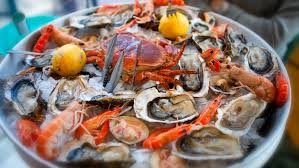
For me personally, I believe the foundations for a genuinely decent plate of food must lie with the varied world of all things aquatic – the lovely fishy things that swim and waft! You wouldn’t think so but I personally find they don’t endure the rigors of the hot pan quite as well as meat dishes. Give a dish just another minute or two over a heat, and something sublime becomes a ruined fish-y rubber disc or a desiccated disappointment.
Here’s my run-down on getting them just so.
Good Quality Seafood
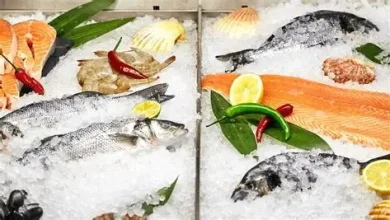
Before a single flame is lit or any kind of process is started, you have to get some top-quality fish to work with. I find when I’m in fish markets asking for information on the origin of the fish, I get responses more akin to ‘nowhere I can tell you love’, but there is an advantage to seeking out fish that has been caught or prepared by people who know what they are doing and know how to label their produce!
The Smell of the Ocean
Fresh fish smells the sea – a wonderful salty aroma – not anything pungent, fetid or acrid. While of course, everything in the ocean does smell a little ‘of the ocean’, if your fish is pungent and over-powering – run in the other direction!
Seasons
Whether it be fish or shellfish, they should be at their absolute best when they are naturally in season. Although the season of a particular fish may be more nuanced than other types – it depends, of course, how and when the fish was caught.
How the Fish Was Caught
A trawled fish, for example from the deep sea, will not offer anything like the taste experience as that caught on a line from the deck of a small boat. It is no excuse in this modern age to cause such destruction to the marine environment and still think the fish produced is top tier!
Which Part
We are still learning, even today, about the wonderful parts of a fish that can be utilized in a dish, but traditionally many parts – heads and frames for stocks and bones – are good starting points!
Techniques Required to Cook Gourmet Seafood
Just some techniques you will need to consider.
The art of searing and browning: a pan-seared dish will possess a beautiful crispy or browned exterior but with a moist and flavorsome centre, because honestly…who can say anything positive about an overcooked piece of fish! This works for fish, shellfish, prawns, scallops, well everything!
Poaching: this may seem the most ‘basic’ technique, and if executed incorrectly, your blandest of fish can be made even more insipid. But surprisingly enough poaching those of our more sensitive species, such as salmon and trout, in a lightly infused broth, made perhaps from a small onion, some carrot and a celery stick, is an excellent way of tenderizing perfectly and preserving delicately flavored fish species, without compromising their structure unduly.
Griddling: from a more firm piece of fish such as tuna, to a multitude of shellfish, this will impart a delightful char or smoky flavor and caramelise dressings or marinades to a point of pure artistry! An excellent choice for shellfish with shellfish bisques and fresh herbs.
Sous vide: this technique will offer you precisely controlled temperatures for a perfected cooking time, resulting in an almost unbelievably moist and tender dish, that will be quickly seared prior to serving for a crisp finish.
The Importance of Timing
I cannot stress this enough – fish, as with many of the fine things in life, are best enjoyed not over-done.
Over-cooking severely: there really are no acceptable reasons to serve overcooked fish! If your dish is a mess of burnt or hardened edges, with no real texture in the centre – that’s a definite NO!
Rest periods: allow any freshly cooked fish to rest for a couple of minutes prior to serving, as this allows the protein to release, retaining more moisture and flavor as the structure of the flesh begins to relax.
Look and feel: familiarize yourself with the visual cues of how your fish is behaving under the heat, how flaky it is, or if the centre is firm when prodded or tested with a skewer.
Visual and texture: know what good looks like – feel the fish as it cooks – know how much resistance there is to a skewer.
Pairings Enhance Flavour
Elevating even the most beautiful ingredient can be achieved with the right partners!
Citrus brightener: the tang of a lemon or lime, a splash of wine, or indeed a vinaigrette will sing through any dish that needs that lift to enhance natural sweetness and texture. And do not think solely about lemon and lime, think of capers and aged balsamic too!
Herbs: if you are going to complement seafood, you need a good mix of herbs. Diligent with your fresh parsley and dill? Think of a zesty element of lemon or perhaps feathery dill fronds for a sophisticated finishing touch.
Wine: a delicate white wine will forever be the traditional and, for my mind, one of the finest accompaniments for many fish dishes, particularly if you are paying a bit more for your piece of seafood! I’m not going to tell you I wouldn’t drink a nice claret with a chunk of salmon though!
Accompaniments: for me, simple is always best; just a touch of well-seasoned vegetable or grain (like rice, to be fair) will serve to enhance any of our delicious piscine products, without detracting or overshadowing!
Presentation as a Craft
As well as cooking fish, how you present it is paramount to the entire dining experience.
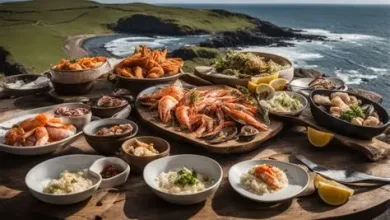
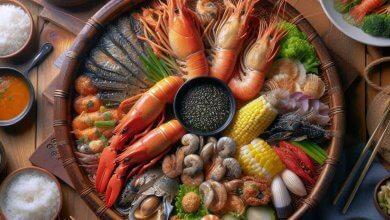
Plating your dish: as with anything in life, I personally think that presentation has a crucial part to play in the dining experience and you should always try to showcase the inherent beauty of the seafood you are serving!
Garnishes and flavourings: a flourish of dill or micro-greens, or some zest should be the minimum; however, perhaps try whipping up some quick seafood butter as a finishing touch for that truly ‘gourmet’ edge.
Showcase the beauty of the seafood: ultimately, the real showstopper is the fish, so remember that the presentation of the food itself is secondary to the flavor and the aesthetic should not dominate your thinking process.
Common Cooking Mistakes
Do not overcrowd the pan – this is one of the most common mistakes a person can make, leading to a dismal experience where the resulting steam prevents the browning of the dish – and, subsequently.
Thanks